

Why Middle Eastern and Asian Markets Are Opening to Nicotine Pouches Faster Than Europe

As nicotine pouches gain global traction, a clear trend is emerging: markets in the Middle East and parts of Asia are adopting these products more quickly and more decisively than the European Union. This development may seem counterintuitive, given Europe’s long history of harm-reduction leadership and the success of countries like Sweden and Denmark. However,…

Read more

Luxembourg’s Uncertain Path on Nicotine Pouches: Why Clarity Matters for Consumers and Public Health

Luxembourg is moving closer to adopting rules that could heavily restrict the sale of nicotine pouches, but recent reporting from Luxembourg Times shows significant uncertainty about what these measures will actually mean in practice. Although the government says it intends to regulate nicotine pouches rather than ban them, many stakeholders worry that vague definitions and…

Read more

Introducing GINN’s Submission to the UK DHSC Consultation on Nicotine Pouch Regulation

By Robert Sidebottom, Chair of the GINN Regulatory & Compliance Committee and Managing Director, Arcus Compliance As the UK considers long-awaited regulatory controls for nicotine pouches under the Tobacco and Vapes Bill, the Global Institute for Novel Nicotine (GINN) has formally submitted a detailed evidence-based response. This submission outlines the essential steps needed to build…

Read more

Global Institute For Novel Nicotine Submission Call For Evidence – Tobacco and Vapes Bill November 2025

This submission is provided on behalf of the Global Institute for Novel Nicotine (GINN), which advocates for proportionate, science-based regulation that recognises tobacco harm reduction (THR) as a legitimate public health strategy Our focus is on the necessary regulation of nicotine products, specifically nicotine pouches, which are currently available on the UK market but operate…

Read more

COP11 Shows a Divided World: Why Europe Must Not Import WHO’s Anti-Harm-Reduction Stance

COP11 has concluded, but the debate around nicotine regulation is far from settled. While delegates left Geneva without adopting aggressive new restrictions, the WHO’s long-standing hostility toward tobacco harm reduction remains firmly in place. The organization continues to frame non-combustible products, such as nicotine pouches, e-cigarettes, and heated tobacco, through the same lens as conventional…

Read more

Welcoming María del Carmen Ordóñez López to GINN

I’m delighted to welcome María del Carmen Ordóñez López as GINN’s Legal Advisor. María del Carmen brings more than two decades of strategic legal, compliance and governance experience across multinational corporations, start-ups and specialist advisory roles, and will be a pivotal voice in shaping our legal and regulatory work on novel nicotine policy and harm-reduction…

Read more

India Can Learn from Bold Tobacco Harm Reduction Actions In The Region

Saudi Arabia’s successful Public Health experiment Backed by the Public Investment Fund (PIF), Saudi company Badael has rapidly scaled its harm reduction initiative using its flagship DZRT tobacco-free nicotine pouch. Since its 2023 launch, the program has helped nearly 400,000 smokers move away from combustible tobacco, with 140,000 reportedly quitting nicotine altogether. This progress contributes…

Read more

Nicotine Pouches and Health Risks: What New Clinical Evidence Reveals

A recent study published in JAMA Network Open provides important insights into the biological effects of nicotine pouches, adding much-needed clinical evidence to an area often dominated by speculation. The findings reaffirm a central message in tobacco harm reduction: while nicotine is addictive, the health risks associated with non-combustible nicotine products are dramatically lower than…

Read more

Nicotine and Medical Research: The Overlooked Science Behind a Stigmatized Molecule

Nicotine has been vilified for decades, often conflated with the devastating health effects of smoking. Yet modern medical research continues to show that nicotine itself is not the cause of smoking-related cancers or cardiovascular disease. Instead, it is the combustion of tobacco, the burning process that releases thousands of toxic chemicals, that drives most smoking-related…

Read more

Policy Momentum on Nicotine Pouches in the UK: Balancing Regulation, Harm Reduction, and Youth Protection

Momentum is building in the United Kingdom toward a coherent and proportionate framework for regulating tobacco-free nicotine pouches. The Tobacco and Vapes Bill, currently progressing through Parliament, and the surrounding debates in both Houses have positioned the UK to establish a model that balances youth protection with adult harm reduction, consistent with NHS guidance and…

Read more

GINN’s Position on the EU Excise Directive Revision: Toward a Clear, Fair, and Evidence-Based Framework

GINN has formally contributed to the European Commission’s Consultation on the revision of Council Directive 2011/64/EU, which governs excise duties on tobacco and related products. We welcome the inclusion of nicotine pouches in this revision, provided they are recognized as a distinct, clearly defined category separate from traditional tobacco products. A science-based approach is essential.…

Read more

Portugal Introduces Nicotine Pouch Tax: A Step Toward Regulation and Responsible Harm Reduction

Portugal has taken a decisive step toward formalising the regulation of nicotine pouches by creating a new excise tax category for these tobacco-free, smokeless products. Beginning in 2026, nicotine pouches will be subject to a tax rate of €0.065 per gram of net weight, effectively bringing them under the country’s broader tobacco and nicotine tax…

Read more

Reframing Nicotine Policy: Why Science, Not Stigma, Should Guide Public Health

At a time when nicotine policy too often reflects fear rather than fact, the Nicotine Policy Hub, led by Dr. Jeffrey Willlett, has emerged as a thoughtful and evidence-based voice in the debate. The Hub’s new FAQ on nicotine regulation and harm reduction addresses persistent misconceptions and calls for a principled, science-driven approach that respects…

Read more

Nicotine Pouches and the Gym — Science, Stimulation, and Misconceptions

The growing visibility of nicotine pouches in gyms and fitness circles is sparking a new public conversation about where performance enhancement ends and risk begins. A recent GQ feature, “Why Men Are Using Nicotine Pouches for a Pre-Workout Boost,” captures a surprising trend: young adults, athletes, and casual gym-goers alike are turning to nicotine pouches…

Read more

The Next Evolution of Alternative Nicotine: What Science and Innovation Reveal

The nicotine market is evolving faster than ever. Fueled by shifting consumer preferences, regulatory changes, and ongoing scientific advances, a new generation of smoke-free products is taking hold shape. As traditional tobacco declines, modern oral and inhalable formats are emerging as the next frontier for harm reduction, offering adult smokers safer, more convenient, and increasingly…

Read more

Rutgers Study Finds Nicotine Pouches Pose Minimal Uptake Risk Among Non-Users

A landmark study from Rutgers University offers the clearest national picture yet of nicotine pouch use in the United States, and the findings reinforce what harm reduction advocates have long argued: nicotine pouches are primarily being used by adults with prior tobacco experience, not by nicotine-naïve individuals. A New National Estimate The Rutgers-led research, published…

Read more

Europe’s Nicotine Policy Challenge: Finding Common Ground Through Evidence

Across Europe, governments are navigating one of the most complex public health challenges of our time: how to regulate emerging nicotine products while protecting youth, safeguarding consumers, and achieving long-term health goals. At the Global Institute for Novel Nicotine (GINN), we recognize that these concerns are legitimate. Our goal is not to challenge regulation, but…

Read more

Switching From Cigarettes to Nicotine Pouches: A Safer Step Toward a Smoke-Free Future

For decades, smoking has remained one of the leading causes of preventable death worldwide. Despite countless awareness campaigns and cessation programs, millions of adults continue to smoke, often because nicotine addiction makes quitting extremely difficult. However, not all nicotine use carries the same level of risk, and understanding this distinction is essential to reducing harm.…

Read more

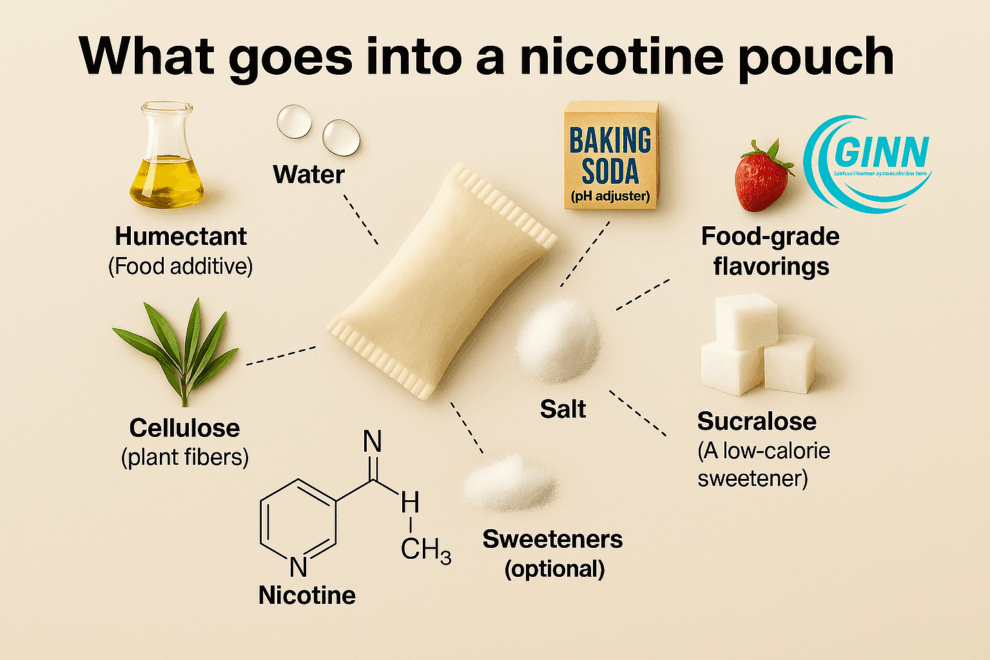
Inside the Pouch: What’s Really in a Nicotine Pouch

As nicotine pouches continue to gain popularity as a smoke-free alternative for adult consumers, understanding their composition has become increasingly important. Unlike traditional tobacco products, nicotine pouches are tobacco-leaf free, relying on plant-based fibers and carefully selected ingredients to deliver nicotine effectively and consistently. Below is a breakdown of the six main ingredient categories typically…

Read more

WHO Tobacco Trends Report: Global Smoking Decline, but Harm Reduction Still Overlooked

The World Health Organization’s new Global Report on Tobacco Trends 2000–2024 paints a complex picture: while smoking rates continue to fall, one in five adults worldwide still uses tobacco. Between 2000 and 2024, the global number of tobacco users declined from 1.38 billion to 1.2 billion, an impressive 120 million fewer smokers since 2010. Yet,…
Read more

Nicotine Content Matters: What an Independent Lab Study Reveals About Oral Pouches and Smokeless Tobacco Substitution

A new, independently conducted clinical study in Experimental and Clinical Psychopharmacology offers rare, high-quality evidence on how oral nicotine pouches perform for people who already use smokeless tobacco (SLT) and why nicotine content is the hinge on which substitution success turns. What the study asked and why it matters Alisha Eversole and colleagues at Virginia…

Read more

Denssi: Innovation, Adaptation, and New Frontiers in Oral Nicotine

At InterTabac, GINN’s Phil Hudson sat down with Hannu Karvonen, representing Denssi nicotine pouches, a Finnish brand making waves in Europe and beyond. In their conversation, Karvonen shared how Denssi is balancing product innovation, global expansion, and new category development to meet changing consumer demands. From Finland to the World Denssi’s story begins in Finland,…

Read more

Restricting Nicotine Pouches Makes Quitting Harder for Workers

Policies meant to restrict access to nicotine pouches are turning out to be counterproductive, especially for workers, whose access to tobacco alternatives is already constrained by time, location, and economic pressures. In New Brunswick, Canada, a construction worker’s story powerfully illustrates the human cost when safer options are forced off convenience shelves and buried behind…

Read more

The Next Evolution of Oral Pouches: From Harm Reduction to Wellness and Beyond

At the New Approaches Summit 2025, the conversation around oral pouches moved beyond nicotine. What began as a harm reduction innovation has now evolved into a platform with potential far beyond smoking alternatives. Oral pouches, once defined by snus and nicotine, are being reimagined as discreet, fast-acting vehicles for functional microdosing and even emerging therapeutic…

Read more

FDA Moves to Fast-Track Nicotine Pouch Reviews Under White House Pressure

The U.S. Food and Drug Administration (FDA) is accelerating its review of nicotine pouches, responding to mounting pressure from the White House to clarify the regulatory status of one of the fastest-growing categories in tobacco harm reduction. A Rapidly Expanding Market in Limbo Nicotine pouches, tobacco-free oral sachets delivering nicotine without combustion, have surged in…

Read more

FDA Strengthens Packaging Rules for Nicotine Products: Why Child Safety Matters

The U.S. Food and Drug Administration (FDA) has announced strengthened requirements for child-resistant packaging (CRP) on nicotine products, underscoring the critical importance of safeguarding children while balancing access for adult smokers seeking reduced-risk alternatives. The decision comes amid rising concerns about accidental ingestion of nicotine pouches, e-liquids, and other smoke-free products. Although these products pose…

Read more

Canada’s Nicotine Pouch Ban: One Year On, Illicit Markets Thrive

In July 2024, Canada banned the legal sale of nicotine pouches, restricting them to prescription-only access through Health Canada’s medical framework. At the time, regulators argued the move was necessary to protect youth from nicotine initiation. One year later, the results are clear and deeply troubling. Instead of reducing use, the prohibition has created the…

Read more

Expert Coalition Voices Alarm Over EU’s Proposed Nicotine Tax Shift

A coalition of 83 distinguished global authorities in public health, nicotine dependence, and tobacco control has issued a forceful open letter to the President of the European Commission and Commissioners. Their unified message: imposing steep new taxes on reduced-risk nicotine alternatives, such as e-cigarettes, heated tobacco, and nicotine pouches, would be a grave misstep. They…

Read more

Nicotine Pouches in Saudi Arabia: Early Evidence on Prevalence, Safety, and Smoking Cessation

Nicotine pouches, small tobacco-free sachets delivering nicotine orally, are emerging globally as a potential harm reduction tool. In Saudi Arabia, where smoking remains a major health burden and cultural factors shape patterns of tobacco use, new research provides the first comprehensive look at how nicotine pouches are being adopted, their perceived benefits, and the risks…

Read more

GINN Insight: The EU Tobacco Directive Review and Excise Proposal

The European Union is preparing its most ambitious overhaul of tobacco and nicotine regulation in over a decade. With the simultaneous review of the Tobacco Products Directive (TPD), the Tobacco Advertising Directive (TAD), and a comprehensive recast of the Tobacco Excise Directive (TED), Brussels is signaling a shift that will affect consumers, governments, and the…

Read more

AFN25: Asia’s Moment to Reframe Tobacco Harm Reduction

Contribution from Nancy Loucas The inaugural Asia Forum on Nicotine (AFN25), hosted by the Coalition of Asia Pacific Tobacco Harm Reduction Advocates (CAPHRA) on 27 August, was a resounding success. The event drew together global experts, advocates, and consumers to champion evidence-based harm reduction strategies tailored to the Asia-Pacific region’s staggering 781 million tobacco users,…

Read more

A Regulatory Journey of Modern Oral Nicotine Across Asia

Asia, the world’s largest consumer of combustible tobacco, is becoming a critical region in shaping the regulatory future of nicotine pouches and other smoke-free products. As governments across the continent respond to rising demand for safer nicotine alternatives, the picture that emerges is far from uniform. Regulations range from strict prohibitions and pharmaceutical-style oversight to…

Read more

Rethinking Nicotine: Why Accurate Risk Perception Matters for Public Health

Nicotine has long been misunderstood. Decades of public health messaging, though well-intentioned, have blurred the lines between nicotine itself and the deadly effects of combustible tobacco. A recent study published by the American Psychological Association underscores how deeply these misperceptions run, and why correcting them is essential for effective harm reduction. Misperceptions That Fuel Mistrust…

Read more

Smoke-Free Products and Harm Reduction: What the Toxicology Tells Us

Despite decades of progress in tobacco control, smoking remains widespread across Europe. In countries like Germany, millions continue to smoke with little motivation to quit, leaving policymakers and scientists searching for pragmatic ways to reduce the toll of combustible tobacco. A recent article in Internal and Emergency Medicine by aerosol chemist Reinhard Niessner brings the…

Read more

Toward Smarter Tobacco Regulation: Lessons from Global Approaches

Around the world, governments are rethinking how best to regulate tobacco and nicotine products in light of new science and innovation. Traditional tobacco control has long focused on restrictions and prohibitions, but the emergence of smoke-free alternatives, such as heated tobacco, e-cigarettes, and oral nicotine pouches, demands a more nuanced, evidence-based approach. The Need for…

Read more

Harm Reduction in Argentina: A Path Yet to Be Taken

Argentina is at a crossroads in its approach to tobacco control. Despite the country’s strong public health traditions and high burden of smoking-related disease, harm reduction strategies that could save lives remain absent from official policy. While other nations in Latin America and beyond are cautiously exploring safer nicotine alternatives, Argentina continues to rely on…

Read more

Australia’s Nicotine Policy Crossroads: Why Harm Reduction Can’t Wait

Australia now has one of the most restrictive nicotine control regimes in the developed world. Cigarettes face some of the highest taxes globally, while consumer nicotine vaping products are virtually banned. Intended to curb smoking, these policies have instead fuelled a thriving black market for tobacco and vapes, bringing with it organised crime, violence, and…

Read more

Rethinking Nicotine: Modulation, Mood, and Neuroprotection via nAChRs

Despite decades of stigma, nicotine continues to reveal surprising roles in brain health through its interaction with nicotinic acetylcholine receptors (nAChRs). From improving attention to potentially slowing neurodegeneration, new science challenges outdated assumptions—and calls for a more nuanced conversation. Cognition and Mood: Nicotine’s Modulatory Role Nicotine’s primary mechanism of action in the brain is through…

Read more

Norway’s Nicotine Pouch Ban: A Missed Public Health Opportunity

Norway’s continued ban on nicotine pouches, in force since 2017, is one of the strictest policies in Europe. Despite mounting evidence that these products are significantly less harmful than cigarettes, they remain prohibited for sale and even private import. The intent, officials say, is to protect youth from nicotine initiation. Yet, many experts argue this…

Read more

Oral Nicotine Use: A Global Perspective on Regional Traditions and Regulation

From the betel-stained smiles of Southeast Asia to Scandinavia’s sleek pouch packaging, the rise of oral nicotine is not a one-size-fits-all story. Regional traditions, risk perceptions, and regulatory choices are shaping the path of harm reduction around the world, highlighting both promise and pitfalls. Southeast Asia: Tradition Meets Resistance Southeast Asia is home to more…

Read more

Kenya at a Crossroads: Regulating Nicotine Pouches and the Future of Tobacco Harm Reduction

By Joseph Magero Kenya is on the brink of a pivotal decision in its tobacco control journey. The Tobacco Control (Amendment) Bill 2024, now under review by the Senate, is poised to introduce long-overdue regulation of new nicotine products, specifically nicotine pouches, e-cigarettes, and other smokeless alternatives that have until now existed in legal limbo.…

Read more

The Cultural Tapestry of Tobacco in India: Tradition, Inequality & Control

India’s tobacco landscape is uniquely complex and deeply rooted in social, regional, and cultural practices. This narrative review examines how tradition, yes, but also inequality and economic factors, shape tobacco use, and what that means for policy. Deep Roots: Tobacco as Tradition and Livelihood Tobacco in India isn’t new, it’s woven into rituals, social ceremonies,…

Read more

Smoke-Free Products Behind the Counter: Lessons from Pharmacist-Only Access in Canada and Australia

When nicotine pouches and vapes are confined to pharmacy sales, governments may intend to protect youth, but the effects can limit access, fuel illicit markets, and undermine harm reduction goals. Canada: Pharmacists Push Back on Expanding Retail Access In late July 2025, a national association of Canadian pharmacists firmly rejected proposals to expand nicotine pouch…

Read more

Why the WHO Is Failing Its Own Tobacco Treaty? A Call for Harm Reduction Clarity

As global tobacco control architecture evolves, there’s growing concern that the WHO is reading its own treaty, the Framework Convention on Tobacco Control (FCTC), too narrowly. Ironically, while the FCTC explicitly includes harm reduction strategies in its mandate, WHO has sometimes dismissed reduced-risk nicotine products as part of industry rhetoric to be disregarded. This contradiction…

Read more

Rethinking the Role of Nicotine: A Science-Based Perspective on Harm Reduction

Nicotine has long been viewed through a narrow lens—often equated with smoking, addiction, and disease. But new research continues to challenge this oversimplification. As the global public health community confronts the rise of reduced-risk nicotine products like pouches, e-cigarettes, and heated tobacco, it is vital that we separate myth from evidence in shaping responsible policy.…

Read more

Doubling Down on Nicotine Science: Springer Expands Its Focus on Smoke-Free Products

As the science around nicotine delivery evolves, so too must the platforms that publish and shape global understanding of its impacts. Springer’s Internal and Emergency Medicine journal has responded to this challenge with a bold move: the relaunch and expansion of its curated research collection under a new title—“Health Effects of E-Cigarettes, Heated Tobacco and…

Read more

Real-World Insights: The Beaumont–Chaudhary Exchange

While the debate around a unified term for non-combustible nicotine products continues across policy, science, and public health spheres, some of the most illuminating progress has come from within the community itself. In a recent exchange between Australian clinician Dr. Carolyn Beaumont and GINN Science & Standards Committee Chair Dr. Nveed Chaudhary, two leading voices…

Read more

Language Matters: Why I’m Backing a Global Term for Alternatives to Smoking

By Shem Baldeosingh, Director, Global Institute for Novel Nicotine (GINN) In a global conversation about alternatives to smoking, terminology might seem secondary—but it’s not. Language shapes perception, policy, and access. For too long, inconsistent terms and acronyms have muddled understanding and hampered harm reduction progress. That’s why we’re opening the door to a wider community…

Read more

Safeguarding Children in the Era of Novel Nicotine: A Call to Action

In response to: “Nicotine Pouch Poisonings Spike in Young Children“ A recent study published in Pediatrics has revealed a troubling rise in child nicotine poisonings in the U.S.—more than 134,000 cases involving children under 6 were reported to poison control centers between 2010 and 2023. Since 2020, exposures linked to nicotine pouches in particular have…

Read more

Tobacco Taxes and Harm Reduction: A European Crossroads

The European Commission’s approval of the 2028–2034 Multiannual Financial Framework signals a seismic shift in how tobacco taxation will function across the European Union. While touted as a modernization of fiscal policy, the measures raise critical questions about the future of harm reduction and whether safer alternatives to smoking will remain accessible and incentivized. 🔍…

Read more

Language Matters: Time for a Global Term for All Alternatives to Smoking

Inspired by Dr. Carolyn Beaumont, an Australian clinician In the constantly evolving world of nicotine products, acronyms abound—NRT, NVP, ANDS, ENDS, e-cigarettes, HNB. Each of these terms captures a slice of the market, but none offer the unified, stigma-free language we need for effective global communication. That’s why the time has come to adopt one…

Read more

Sweden Stands Firm: Why the EU’s Tobacco Tax Proposal Risks Undermining a Proven Public Health Model

A leaked draft of the European Commission’s proposed Tobacco Tax Directive has sent shockwaves across public health and policy communities. Among its most controversial measures: an unprecedented tax hike on nicotine pouches—Sweden’s leading tool in its harm reduction strategy. The plan suggests increasing the tax on pouches in Sweden by over 650%, from 207 SEK/kg…

Read more

The Rise of Tobacco-Free Nicotine Pouches in the UK: A New Era After the Disposable Vape Ban

By Phil Hudson, Co-Founder & Associate Director @ GINN UK POLICY SHIFT: DISPOSABLE VAPES OUT, RESPONSIBILITY IN On 1 June 2025, the UK initiated a transformative public health and environmental move, the full-scale ban on disposable vapes.Targeting youth usage and the 5million+ weekly waste burden, the law now mandates sales of reusable devices only, with…

Read more

Measuring the Right Thing: Why Nicotine Strength Doesn’t Equal Exposure

As nicotine pouches continue to gain global attention—praised by some as a safer alternative, and feared by others as a new public health risk—one claim is appearing with increasing frequency: “Pouches contain more nicotine than cigarettes.” While this may be technically true in terms of total nicotine content, it is fundamentally misleading when used to…

Read more

GINN Insight: Kenya Sets New Benchmark with Comprehensive Nicotine Pouch Regulation

In 2025, Kenya became one of the first African countries to implement a fully integrated legal framework for regulating nicotine pouches. The government’s robust approach has aligned nicotine pouches with conventional tobacco products under national health law, closing critical loopholes and signaling a significant shift in the country’s public health policy. The newly gazetted rules,…

Read more

The Missed Opportunity: Why Pouch Access Lags in Low-Income Communities

Nicotine pouches have emerged as a key innovation in the fight against smoking-related disease—offering a clean, discreet, and combustion-free option for adults seeking to quit cigarettes. Yet despite their potential, one group remains consistently underserved: low-income communities. These are the very populations most affected by smoking-related harm, and yet they are often the last to…

Read more

How Nicotine Pouches Are Reshaping Workplace Wellness Policies

As organizations continue to refine their approaches to employee health, safety, and productivity, the rise of nicotine pouches presents a new consideration for workplace wellness strategies. Traditionally, smoking cessation support has centered on nicotine replacement therapy (NRT), education, and smoke-free policies. But today, a growing number of employers are beginning to acknowledge the role that…

Read more

Latest Regulatory and Legislative Developments (Apr–Jun 2025)

Australia Queensland’s 2025 Amendment Regulation now classifies nicotine pouches as “illicit nicotine products,” creating new offences for their supply or possession in a business context and imposing penalty-infringement notices up to 200 penalty units for individuals and 1,000 for corporations. South Australia has banned nicotine pouches under its new illicit-products framework, treating them on par…

Read more

Designing for Dignity: Why Discretion Matters in Nicotine Innovation

As the landscape of nicotine products evolves, much of the focus has rightly been placed on safety, efficacy, and regulation. Yet there is another equally important dimension that receives far less attention: dignity. For millions of adult smokers trying to quit, dignity—and the discretion that helps preserve it—can be a determining factor in whether they…

Read more

GINN Policy Update: Pouches and NRT – A Balanced Framework for Harm Reduction

By Shem Baldeosingh, Director The Global Institute for Novel Nicotine (GINN), with the benefit of Joel Rubenstein’s vast expertise in the category, is working a comprehensive policy position on nicotine pouches and Nicotine Replacement Therapy (NRT), reaffirming our commitment to advancing harm reduction through innovative, science-backed alternatives to smoking. GINN strongly supports the availability of…

Read more

Spotlight on Spain: A Tense Regulatory Crossroads for Nicotine Pouches

Spain is quickly becoming a focal point in the broader European debate over nicotine pouches. While EU institutions weigh broader harm reduction strategies, Spain has taken a more cautious—and in some cases, restrictive—approach to regulating these alternatives. GINN recently held a regional engagement in Spain to better understand the local regulatory landscape, meet with policymakers…

Read more

One Size Doesn’t Fit All – GINN Responds to WHO’s Push for a Global Flavor Ban

The World Health Organization (WHO) has renewed its call for a global ban on flavored nicotine products—a move that continues to raise concerns among harm reduction advocates, public health professionals, and adult consumers who rely on these products to quit smoking. At GINN, we recognize the critical need to protect youth. But we also believe…

Read more

Taxing Trouble: Why Europe’s Tobacco Strategy Must Balance Health Goals with Economic Realities

A leaked internal report from the European Commission has raised urgent questions about the EU’s proposed overhaul of the Tobacco Excise Directive (TED). While the stated goals—reducing smoking and boosting revenue—may be well-intentioned, the Commission’s own analysis warns that sweeping tax hikes could have serious unintended consequences. From soaring excise increases to mounting black market…

Read more

GINN INSIGHT: Nicotine Replacement Therapy at a Crossroads- Innovation or Irrelevance?

By Joel Rubenstein, GINN Focal Point Nicotine Replacement Therapy (NRT) was born not out of global health ambition—but naval necessity. In the 1960s, Swedish submariners needed a smoke-free and spit-free way to consume nicotine underwater. The solution was nicotine gum—commissioned by the Swedish Navy and developed by local pharmaceutical companies. What started as a practical…

Read more

Power in a Pouch: Sweden’s Harm Reduction Success Shows the Way Forward

Sweden is poised to become the first country in the world to reach “smoke-free” status—defined as a smoking rate below 5%. According to newly released data, this achievement is not the product of prohibitionist measures but of pragmatic, evidence-based harm reduction policies, with nicotine pouches playing a central role—especially among women. The report Power in…

Read more

EU Member States Urge Tighter Regulation of Vaping and Novel Nicotine Products

Several European Union Member States have formally called on the European Commission to introduce stricter regulation of vaping products and emerging nicotine alternatives. This coordinated initiative reflects growing concern among national governments about rising youth experimentation and the evolving nicotine product landscape. It also signals that the revision of the Tobacco Products Directive (TPD) and…

Read more

Oral Health and Nicotine Alternatives: New Evidence from a Systematic Review

A newly published systematic review and network meta-analysis by La Rosa et al. (2025) offers valuable insights into the oral health effects of non-combustible nicotine products (NCNPs). As these products gain popularity as reduced-risk alternatives to smoking, understanding their broader health impact—including on oral health—is critical for clinicians, policymakers, and harm reduction advocates alike. The…

Read more

AHA Issues Guidance on Cardiovascular Risks of Smokeless Oral Nicotine Products

On January 7, 2025, the American Heart Association (AHA) released a comprehensive policy statement examining the cardiovascular health implications of smokeless oral nicotine products. Published in Circulation, the statement evaluates emerging products such as tobacco-free nicotine pouches, lozenges, gums, tablets, and gummies, many of which contain synthetic nicotine. This is the AHA’s first detailed update…

Read more

How Oral Nicotine Pouches Empower Women in Sweden’s Smoke-Free Success

Sweden is on track to become the first country in Europe to achieve smoke-free status, defined as having fewer than 5% of the adult population smoking. Behind this milestone is a powerful shift in consumer behavior—particularly among women—driven by the rising popularity of oral nicotine pouches. A recent press release from Smoke-Free Sweden highlights how…

Read more

Comparative Study Highlights Faster Nicotine Delivery with Bioceramic-Based Pouches

A new preprint study conducted by researchers at Emplicure provides promising evidence that bioceramic calcium sulfate-based nicotine pouches may offer faster and more efficient nicotine delivery than conventional cellulose-based formats. The findings, currently hosted on Research Square, could shape future innovations in nicotine pouch design and regulation. The study, titled Comparative study of calcium sulfate…

Read more

Science, Safety & Regulation: The Role of Nicotine Pouches at GFN25

At the 2025 Global Forum on Nicotine in Warsaw, Emplicure Chief Clinical, Regulatory & Quality Officer Dr. Anna Franzén delivered a compelling presentation during the panel “Nicotine Pouches: What’s the Real Story?”. What Dr. Franzén Shared Dr. Franzén emphasised three critical pillars for nicotine pouches: Established safety of medicinal nicotine — highlighting how regulatory frameworks for nicotine…

Read more

Joseph Magero Appointed GINN’s Focal Point for Sub-Saharan Africa

I’m proud to announce that Joseph Magero will officially serve as GINN’s Focal Point for Sub-Saharan Africa. Joseph is a long-standing leader in the tobacco harm reduction (THR) movement—someone whose passion for public health and policy innovation has made a profound impact across Africa. His work spans public education, grassroots advocacy, and regional policy engagement,…

Read more

The Case for Balanced Regulation—Responding to Calls for a Global Flavour Ban

On World No Tobacco Day 2025, the World Health Organization (WHO) and the UN Chronicle issued a strong call for governments to ban all flavours in tobacco and nicotine products, including cigarettes, e-cigarettes, and oral nicotine pouches. Their rationale is clear: flavours like bubblegum, cotton candy, and menthol are being used to attract youth and…

Read more

Illicit Trade and the Cost of Inaction: What Retailers Expect After the Tobacco and Vapes Bill

By Rohan Pike, GINN Focal Point on Anti-Illicit Trade As the UK’s Tobacco and Vapes Bill moves toward implementation, independent retailers are bracing for the fallout—not from enforcement, but from the lack of it. The Federation of Independent Retailers (The Fed) has sounded the alarm: small stores are already struggling to survive, and without proper…

Read more

Smoke-Free Generation Policies: A Public Health Goal or a Regulatory Trap?

Across Europe, the idea of a “smoke-free generation” is gaining traction among lawmakers. Proposed policies seek to ban the sale of tobacco products to anyone born after a certain year—effectively making smoking illegal for future generations. While these proposals may appear to be a bold public health move, they are increasingly coming under scrutiny for…

Read more

Saudi Arabia’s Next Steps on Nicotine: Science, Policy, and Public Health

The Kingdom of Saudi Arabia is emerging as a pivotal region in the global harm reduction conversation, with momentum growing around novel nicotine products like oral pouches. At the recent Tobacco and Nicotine-Free Summit (TNFS), Dr. Christopher Russell, a behavioral scientist and harm reduction expert, outlined critical next steps for advancing nicotine policy in the…

Read more

Navigating the EU’s Nicotine Pouch Tax Dilemma: What Policymakers Need to Know

The European Union stands at a crossroads. As lawmakers work to balance public health priorities with fiscal responsibilities, nicotine pouches have become a fascinating test case that could reshape how we think about harm reduction policy. Recent leaked documents from the European Commission reveal three distinct taxation approaches under consideration—each with profound implications for public…

Read more

The Price of Prohibition: France’s Nicotine Pouch Ban Sparks Industry Backlash

The recent French ban on nicotine pouches has triggered a wave of backlash from harm reduction advocates, public health experts, and industry stakeholders. With punitive penalties and sweeping restrictions, the law represents one of the most stringent measures on nicotine alternatives seen in Europe. However, the story is still unfolding—and resistance is mounting. Industry Backlash…

Read more

Raising the Bar: GINN’s Industry Guidance on Nicotine Pouch Packaging

By Robert Sidebottom, Chair of Regulatory & Compliance Committee, GINN & Managing Director, Arcus Compliance As regulators across Europe increase scrutiny of novel nicotine products, the need for clear, enforceable, and science-based packaging standards has never been greater. That’s why the Global Institute for Novel Nicotine (GINN) is endorsing the work of their member Arcus…

Read more

A Call for Responsibility in Nicotine Product Marketing

At the Global Institute for Novel Nicotine (GINN), we are committed to promoting science-based harm reduction, product responsibility, and ethical standards across the nicotine sector. While innovation and consumer choice are vital, they must always be balanced with a duty of care to public health, especially where youth appeal, misinformation, or excessive product strength are…

Read more

What’s Inside a Nicotine Pouch? New Study Sheds Light on Toxicant Profile

As novel nicotine pouches continue to gain traction across global markets, questions around their contents and safety remain top of mind for regulators, public health experts, and adult consumers. A comprehensive study published in the journal Drug and Chemical Toxicology helps answer one of the most pressing questions: What’s actually inside these tobacco-free pouches? 🧪…

Read more

🔬 Welcoming Dr. Nveed Chaudhary as Chair of GINN’s Science and Standards Committee

The Global Institute for Novel Nicotine (GINN) is honored to welcome Dr. Nveed Chaudhary as Chair of our Science and Standards Committee—a role central to guiding our mission for credible science, responsible innovation, and global public health advancement. Dr. Chaudhary brings more than 20 years of leadership at the intersection of science, regulation, and public…

Read more

The Price of Prohibition: France’s Nicotine Pouch Ban Sparks Industry Backlash

France’s recent law banning nicotine pouches has become one of the most extreme regulatory actions taken against novel nicotine products in Europe. The ban, passed with limited parliamentary debate, criminalizes the sale, possession, and use of nicotine pouches, regardless of product formulation or age of the user. 🔴 Harsh Penalties Mirror Criminal Offenses According to…

Read more

Poland’s Proposed Ban on Flavoured Nicotine Pouches: A Sign of Europe’s Regulatory Shift?

Poland’s Ministry of Health is advancing legislation to ban flavoured nicotine pouches and disposable vape products, aiming to curb youth uptake and reduce nicotine experimentation among non-smokers. The draft bill, expected to pass given the ruling coalition’s parliamentary majority, would limit pouch flavours to tobacco-only options. A Broader European Trend Poland’s move aligns with a…

Read more

Poland’s Nicotine Pouch Legislation: A Critical Test for Balanced Regulation

As the European nicotine landscape continues to evolve, Poland has become the latest member state to advance a national regulatory framework for nicotine pouches. The proposed law—now progressing through parliamentary stages—seeks to impose restrictions aimed at protecting youth while introducing much-needed clarity to a category that has, until now, operated in a regulatory grey area.…

Read more

Understanding Relative Risk: A Comprehensive Review of Nicotine Products and What It Means for Harm Reduction

A newly updated systematic review and meta-analysis published in F1000Research delivers one of the most comprehensive evaluations to date on the relative risks of nicotine delivery products. The findings are timely—and critical—for public health officials, regulators, and harm reduction advocates working to reshape tobacco policy for the 21st century. 🔍 Study Overview Researchers reviewed 123…

Read more

The EU’s Tax Proposal on Safer Nicotine Products: A Step Backward for Public Health

Reports have emerged that the European Commission may be preparing a significant tax increase on safer nicotine alternatives—including nicotine pouches and vaping products—by mid-2025. Though not yet confirmed, the leaked plans have stirred concern across industry and public health stakeholders, particularly as EU Tax Commissioner Wopke Hoekstra has recently been touring member state capitals seeking…

Read more

The Hidden Threat: Illicit Nicotine Pouches in the Middle East and North Africa

In the fast-evolving landscape of nicotine products, a silent threat is gaining momentum across the Middle East and North Africa (MENA): illicit nicotine pouches. While this product category is still relatively new to the region, its rapid growth—especially in Saudi Arabia—has created both success stories and serious challenges. A Promising Start, Followed by Illicit Surge…

Read more

GINN Insight: The Unintended Consequences of Raising Taxes on Nicotine Alternatives in the EU — Lessons from Australia

Governments often turn to taxation as a lever to reduce public health risks, curb nicotine use, and generate revenue. In principle, that makes sense. But having seen Australia’s approach firsthand—as a former Australian Federal Police officer and founder of the Tobacco Strike Team—I can tell you this: when taxation goes too far, the consequences are…

Read more

Protecting the UK Market from Illicit Nicotine Pouches: Lessons from Australia’s Mistakes

The Growing Challenge of Illicit Nicotine Products As nicotine pouches gain traction in the UK as a smoke-free alternative, I believe we’re approaching a critical policy crossroads. The decisions made today will determine whether this market grows under a responsible, harm-reduction framework—or falls prey to the kind of illicit chaos I witnessed firsthand in Australia.…

Read more

Spain’s Royal Decree on Nicotine Products Faces Unified EU Rejection

The European Commission and several EU Member States have formally reviewed the draft Royal Decree submitted by Spain which proposes modifications to Spain’s national legislation governing the manufacturing, presentation, and marketing of tobacco products and related products. This draft decree was formally notified to the Commission on January 24, 2025, utilizing the procedure established by…

Read more

Scotland’s Tobacco and Vapes Bill: A Call for Responsible Marketing

As Scotland deliberates the Tobacco and Vapes Bill, the discourse surrounding nicotine pouches has intensified. Professor Linda Bauld, a leading public health expert, has weighed in on the matter, offering insights into the relative harm of nicotine pouches compared to traditional cigarettes and emphasizing the need for responsible marketing practices. Understanding the Harm Profile Professor…

Read more

GINN Welcomes Joe (Youssef) Sakr as Associate Director, MENA: Advancing Harm Reduction in the Middle East

The Global Institute for Novel Nicotine (GINN) is proud to announce the appointment of Joe (Youssef) Sakr as Associate Director for the Middle East and North Africa (MENA). This exciting addition to GINN’s leadership team underscores our commitment to advancing harm reduction and nicotine innovation in a region that is beginning to embrace the potential…

Read more

Credibility, Taxation, and the Illicit Market: Tim Phillips’ Urgent Perspective

Tim Phillips, Managing Director of TobaccoIntelligence, provided an overview with a frank assessment of the challenges—and opportunities—facing novel nicotine products under the EU’s evolving Tobacco Excise Directive (TED). The Tax Credibility Paradox Phillips underscored a unique irony: while taxation is often viewed as punitive, being taxed can actually confer regulatory legitimacy. “Without excise, regulators and…

Read more

Could Oral Nicotine Pouches Support Harm Reduction in the Middle East?

As smoking rates remain stubbornly high across much of the Middle East and North Africa (MENA), health authorities and policymakers are exploring new ways to remember duce the region’s tobacco-related disease burden. One such possibility—oral nicotine pouches—is starting to enter the conversation. A recent article from Economy Middle East raises the question: Could these smoke-free…

Read more

Study Explores How Flavors Influence Nicotine Pouch Use—What It Means for Adult Harm Reduction

A new study highlighted by Medical Xpress raises important questions about the role of flavors in nicotine pouches—and how they may influence the product’s appeal and addictiveness. As nicotine pouches gain traction as smoke-free alternatives, understanding these dynamics is essential for responsible public health policy. Here’s what the research shows, and why balanced regulation—not panic—is…

Read more

Canadian Conservatives Propose Ending Pharmacy-Only Rule for Nicotine Pouches: A Win for Freedom of Choice

A major shift had been proposed for Canada’s nicotine market. The federal Conservative Party recently announced plans to end the restrictive pharmacy-only rule for nicotine pouches, aiming to open wider access to these smoke-free products for adult consumers. However, with the Liberals looking set to retain power in the upcoming federal election, the future of…

Read more

Setting the Record Straight: Nicotine Pouches Are Not for Youth—They’re Harm Reduction Tools for Adult Smokers

A recent article by Griffith University’s Blurred Minds Academy raises concerns about nicotine pouches, suggesting that they are being marketed in a way that appeals to minors. While protecting youth is critical, this narrative misrepresents the purpose and regulatory framework surrounding these products—and risks derailing an important harm reduction strategy for adults seeking safer alternatives…

Read more

France vs. Sweden: How Policy Shapes Public Health in Tobacco Harm Reduction

A comprehensive new report titled “Saving Lives Like Sweden” compares the radically different public health outcomes between France and Sweden in tobacco use and harm reduction. Released by the Second Focused Study (SFS-2N) network, this study makes a powerful case for how adopting or rejecting safer nicotine alternatives directly impacts national health. A Tale of…

Read more

Greece Sets a European Precedent with Science-Based Regulation of Smoke-Free Products

In a significant move towards tobacco harm reduction, Greece has emerged as the first European Union member state to permit scientifically substantiated claims regarding the reduced health risks of smoke-free alternatives. This progressive stance is part of Greece’s comprehensive National Action Plan Against Smoking, which emphasizes harm reduction alongside prevention, cessation support, and protection from…

Read more

GINN Responds to The Sunday Times: Setting the Record Straight on Nicotine Pouches

April 21, 2025 The Global Institute for Novel Nicotine (GINN) issues this response to The Sunday Times article published on April 20, 2025, titled “How pouches of pure nicotine became a teenage craze.” As an organization committed to public health, harm reduction, and regulatory clarity, we believe the article fails to reflect the scientific evidence,…

Read more

UAE Embraces Harm Reduction: A New Era for Nicotine Alternatives

The United Arab Emirates (UAE) is taking a groundbreaking step in redefining tobacco control by officially endorsing the use of less harmful nicotine products as part of its public health strategy. As reported by The National, this shift reflects a global momentum toward harm reduction—prioritizing science-based alternatives that help adult smokers transition away from combustible…

Read more

Advancing Innovation Responsibly: Industry Insights from EVO NXT Milan’s Final Panel

The closing session of EVO NXT Milan 2025 brought together a remarkable group of experts from across the novel nicotine industry to discuss one of the most pressing questions facing the category: how can innovation thrive under increasing regulatory scrutiny? Moderated by Robert Burton (Plxsur), the session featured insights from Geir Hammer (Den Norske Snusfabrikken),…

Read more

Industria, Regulación y Realidad: La Perspectiva Española sobre las Bolsas de Nicotina

Reflexiones desde EVO NXT Milán 2025 | Moderado por Mónica Andrade Durante EVO NXT 2025 en Milán, GINN organizó una mesa redonda pionera en español que reunió a voces clave del ámbito político, regulador y comercial para debatir sobre la evolución del mercado de las bolsas de nicotina en España. Moderado por la Country Manager…

Read more

Standing Together: Michiel Carmel of Clew on GINN, Unity, and Compliance

During EVO NXT 2025 in Milan, GINN caught up with Michiel Carmel of Clew for a candid and inspiring conversation about the evolving nicotine pouch industry—and why collective action is more essential than ever. Reflecting on the energy and camaraderie of the previous evening’s GINN Aperitivo, Michiel noted, “I thought last night was an amazing…

Read more

Inside the U.S. Regulatory Maze: Insights from the EVO NXT GINN Panel

At EVO NXT 2025 in Milan, a standout session hosted by GINN brought together leading experts to decode one of the most complex challenges in the nicotine pouch industry: navigating the U.S. regulatory landscape. The panel, moderated by Dr. Sydney Hiller of Sanova, featured Rachel Schmidt (ALINC Consulting), Dr. Jessica Zdinak (AraC Science), and Chris…

Read more

“We Need Structure, Not Chaos”: Jacobo Truan on Regulation, Innovation, and Clarity in the Nicotine Industry

At EVO NXT Milan, GINN caught up with Jacobo Truan Aguirre, Partner at EPPA and a seasoned regulatory strategist, to discuss what’s at stake for the nicotine pouch industry as European policies evolve. Known for his pragmatic yet principled approach, Truan didn’t hold back in his call for responsible standards, proactive industry engagement, and clear…

Read more

Balancing Regulation, Innovation, and Access: Experts Debate the Future of Nicotine Products at EVO NXT Milan

The Global Institute for Novel Nicotine (GINN) hosted a pivotal panel at EVO NXT Milan 2025, drawing together leading voices in regulation, public affairs, science, and consumer advocacy to tackle the complex interplay between innovation and regulation in the evolving nicotine landscape. The session, moderated by Wingle Group‘s Daria Votinova, featured industry experts Peter Beckett…

Read more

Listening to the Market: A Conversation with Global Snus Founder Tautvydas Kviliunas

At a recent industry gathering, GINN sat down with Tautvydas Kviliunas, founder of Global Snus and the CAMO brand, to explore the evolution of nicotine pouches and the need for clearer communication across the category. Kviliunas, a leading voice in the European nicotine pouch space, shared his candid thoughts on consumer confusion, product formulation, responsible…

Read more

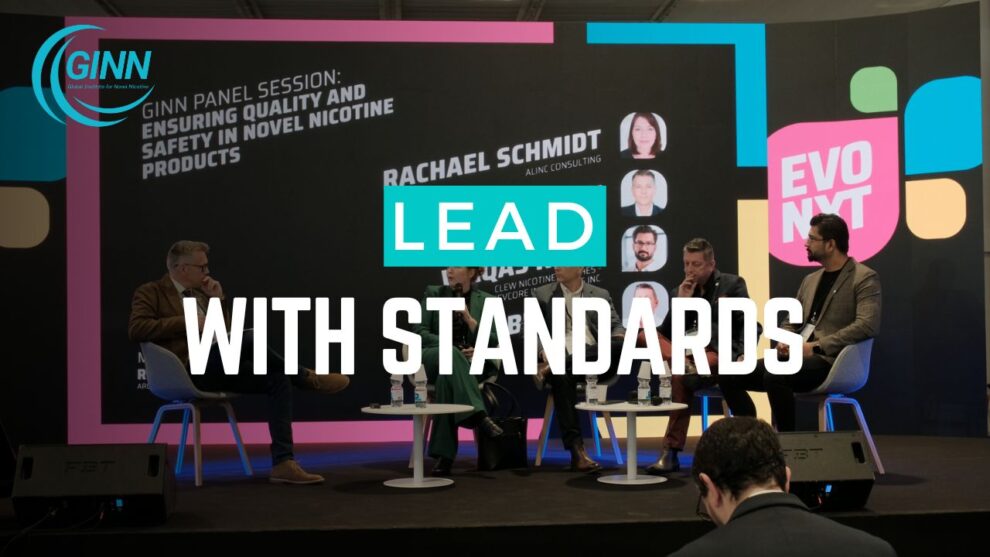
Setting the Standard: GINN Panel Unpacks Quality and Safety in Nicotine Products

Insights from EVO NXT 2025, Milan The Global Institute for Novel Nicotine (GINN) hosted a powerful panel discussion at EVO NXT in Milan, bringing together experts from across science, compliance, and product development to address a crucial industry challenge: how to ensure quality and safety in novel nicotine products. Why a Code of Practice Matters…

Read more

Improving Consumer Clarity in the Nicotine Pouch Market

Insights from Aron Byrne-Carter As the nicotine pouch category continues to expand, one key challenge remains front and center: helping consumers understand what they’re buying. In a recent conversation, Aron Byrne-Carter highlighted some of the biggest pain points facing both customers and retailers—and called for industry-wide action to make things clearer, simpler, and more consistent.…

Read more

Rethinking Nicotine: Southern Europe’s Market Evolution Through Monica Andrade’s Lens

Insights from the GINN Panel on Global Nicotine Industry Trends & Innovation At the Global Nicotine Industry Trends & Innovation panel during the GINN event in Milan, Monica Andrade De Orbe, GINN’s Country Manager for Spain, offered a compelling perspective on the evolving nicotine landscape in Southern Europe. With a focus on Spain, Andrade explored…

Read more

Rethinking Taxation: How Smarter Policies on Safer Nicotine Products Can Drive Public Health Gains

Governments around the world face a complex challenge: how to reduce smoking-related diseases while managing the regulation and taxation of nicotine products. A new briefing from the Global State of Tobacco Harm Reduction (GSTHR) makes a compelling case for how tax policy can support—not hinder—public health goals. Why Taxation Strategy Matters Historically, tobacco taxation has…

Read more

Leaked EU Plan to Tax Nicotine Pouches Sparks Concerns

A confidential European Commission (EC) document, recently leaked, unveils a contentious proposal to impose substantial EU-wide taxes on nicotine pouches (NPs), also known as white snus. This initiative, driven by the Directorate-General for Taxation and Customs Union (DG TAXUD), has ignited significant apprehension among harm reduction advocates, economists, and industry stakeholders. citeturn0search0 Potential Economic and…

Read more

Rethinking Tobacco Taxation and Vaping Regulations in Australia: A Call for Balanced Nicotine Policies

Australia’s approach to nicotine regulation has become a subject of intense debate, with critics arguing that its current framework has failed to distinguish between more and less harmful nicotine products. The sharp increases in tobacco taxes and a ban on consumer vaping have fueled an expansive black market, leading to criminal activity, regulatory gaps, and…

Read more

Navigating the UAE’s New Regulations for Nicotine Pouches: What Manufacturers Need to Know

The United Arab Emirates (UAE) has recently finalized regulations impacting nicotine pouches, marking a significant milestone for the industry’s growth and regulatory clarity in the region. These regulations, outlined by the Emirates Authority for Standardization and Metrology (ESMA), set specific guidelines that manufacturers must follow to ensure compliance, consumer safety, and product integrity. Key Elements…

Read more

Navigating the U.S. Nicotine Pouch Market: Expert Insights from the GINN Masterclass

A Deep Dive into FDA Compliance, Scientific Strategy, and Behavioral Insights for Nicotine Pouch Success in the United States As the U.S. market continues to evolve, nicotine pouch manufacturers face an increasingly complex regulatory landscape. To help industry leaders prepare and strategize for market entry, GINN hosted a powerful masterclass, “Navigating the Introduction of Nicotine…

Read more

The Influence of Artificial Sweeteners in Nicotine Pouches: Enhancing Appeal and Public Health Considerations

Recent research from Duke University School of Medicine has examined the role of artificial sweeteners in oral nicotine pouches and their potential effects on user behavior. The study, which analyzed popular nicotine pouch brands such as On!, Zyn, and Velo, found that these products contain significant amounts of sweeteners like acesulfame-K and sucralose. These additives…

Read more

The Unintended Consequences of Banning Nicotine Pouches: A Focus on Veterans’ Health and Harm Reduction

Nicotine pouches have become an important tool in harm reduction, offering a smoke-free alternative to traditional cigarettes. Many veterans, who historically have higher smoking rates than the general population, have turned to these products as a way to transition away from combustible tobacco. However, recent legislative proposals in New York and other jurisdictions seek to…

Read more

Advancing Harm Reduction Through Stratified Taxation: A European Perspective

Aligning Fiscal Policy with Tobacco Harm Reduction Goals The European Union is at a pivotal moment in shaping the future of tobacco and nicotine taxation. With discussions on revising Directive 2011/64/EU underway, policymakers have the opportunity to introduce a risk-proportionate taxation framework that aligns fiscal policy with public health objectives. This approach would create financial…

Read more

Rethinking Nicotine Taxation: An Evidence-Based Approach to Harm Reduction

Taxation has long been a primary tool for tobacco control, designed to reduce smoking prevalence by increasing the cost of cigarettes. However, the emergence of novel nicotine products such as Electronic Nicotine Delivery Systems (ENDS), Heated Tobacco Products (HTPs), and nicotine pouches challenges traditional taxation models. Policymakers now face a crucial decision: Should all nicotine…

Read more

France Bans Nicotine Pouches: A Setback for Harm Reduction in Europe

France has officially banned the sale of nicotine pouches, a move that underscores the escalating regulatory battle over alternative nicotine products within the European Union. The decision, announced by French Health Minister Aurélien Rousseau, aligns with growing concerns from EU policymakers about the accessibility and potential youth appeal of nicotine pouches. However, this ban raises…

Read more

Balancing EU Regulation for Tobacco-Free Nicotine Products: A Smarter Path Forward

The European Union faces a defining moment in how it regulates tobacco-free nicotine products, particularly nicotine pouches. With some member states opting for outright bans while others seek a more balanced approach, the lack of a unified framework has created inconsistencies that threaten harm reduction efforts, consumer choice, and economic growth. As discussions on the…

Read more

Finnish Proposal for a Responsible and Supervised Sales Model for Nicotine Pouches

The demand for nicotine pouches continues to grow across global markets, including Finland, where discussions about their regulation are gaining urgency. A recent article from Kauppa.fi highlights the pressing need for a responsible and supervised sales model to ensure that nicotine pouches remain accessible to adult consumers while preventing underage use and ensuring product safety.…

Read more

GINN Analysis: Correcting Misinformation on Nicotine Pouches in Australia

By Global Institute for Novel Nicotine (GINN) The South Australian Government’s ban on nicotine pouches, coupled with alarmist media narratives, distorts public understanding of these products. The recent article, “Everything You Need to Know About Nicotine Pouches,” presents nicotine pouches as a serious public health threat without properly assessing their risk profile compared to combustible…

Read more

Ensuring Integrity in Novel Nicotine Products: GINN’s Member Code of Practice

The Global Institute for Novel Nicotine (GINN) has released its Member Code of Practice (CoP) to establish a comprehensive framework for the manufacturing and labelling of novel nicotine products. With regulatory landscapes evolving, GINN aims to ensure product safety, quality, and ethical practices, setting a standard for responsible nicotine innovation. A Framework for Responsible Manufacturing…

Read more

Tackling the Illicit UK Nicotine Pouch Market: The Urgent Need for Proportionate Regulation

A BBC News investigation has shed light on the growing issue of illicit nicotine pouches in the UK, revealing the extent of unregulated sales and their impact on public health. The report highlights how some high-nicotine, unregulated pouches are being sold without proper safety labeling, age restrictions, or marketing controls. This raises concerns about youth…

Read more

Advancing Oral Health through Tobacco Harm Reduction: GINN’s Science-Driven Commitment

The Global Institute for Novel Nicotine (GINN) is proud to champion oral health as a vital component of tobacco harm reduction. Through evidence-based research and actionable guidance, GINN is committed to reducing the burden of tobacco-related oral diseases and fostering healthier outcomes for communities worldwide. A Science-Driven Approach to Oral Health Tobacco use has long…

Read more

Finland’s Stricter Regulations for Nicotine Pouches: A Move Towards Safer Markets

In Finland, nicotine pouches are subject to a specific taxation system that is tied to their strength. The tax is calculated based on the nicotine content per pouch, meaning that higher-strength pouches incur higher taxes. This system aims to discourage the use of high-nicotine products, promoting public health by making them less financially attractive. It’s…

Read more

Tackling Illicit Nicotine Pouches in the USA: A Call for Comprehensive Action

The illicit nicotine pouch market is expanding rapidly, echoing the challenges faced during the early days of the unregulated e-vapor market. Without decisive action, this unregulated sector poses risks to public health, undermines harm reduction efforts, and creates an unfair playing field for compliant manufacturers. Understanding the root causes and addressing the issue with a…

Read more

The Future of Nicotine Pouches in Europe: A Potential Ban Sparks Debate

A recent revelation from a leaked confidential document distributed by the European Commission’s consultant has sent ripples across the nicotine pouch industry. The document reportedly recommends a complete ban on nicotine pouches within the European Union, citing concerns over youth appeal, insufficient regulation, and perceived risks. This proposal has ignited significant debate among public health…

Read more

Snus in Norway: A Consumer-Led Revolution in Tobacco Harm Reduction

Norway is witnessing a profound shift in its approach to tobacco use, driven by consumer preferences and product innovation. The rise of snus, a smokeless, tobacco-containing product, has significantly reshaped the country’s public health landscape. This consumer-led movement demonstrates the transformative potential of harm reduction strategies and highlights the importance of providing safer alternatives for…

Read more

Evolving Standards: Modern Oral Nicotine Products and Global Regulatory Frameworks

The rise of modern oral nicotine products, such as nicotine pouches and lozenges, represents a significant shift in the tobacco harm reduction landscape. These tobacco-free alternatives are increasingly being adopted by adult consumers seeking safer nicotine delivery options. However, with their rapid growth, global regulatory bodies face the challenge of establishing robust frameworks that balance…

Read more

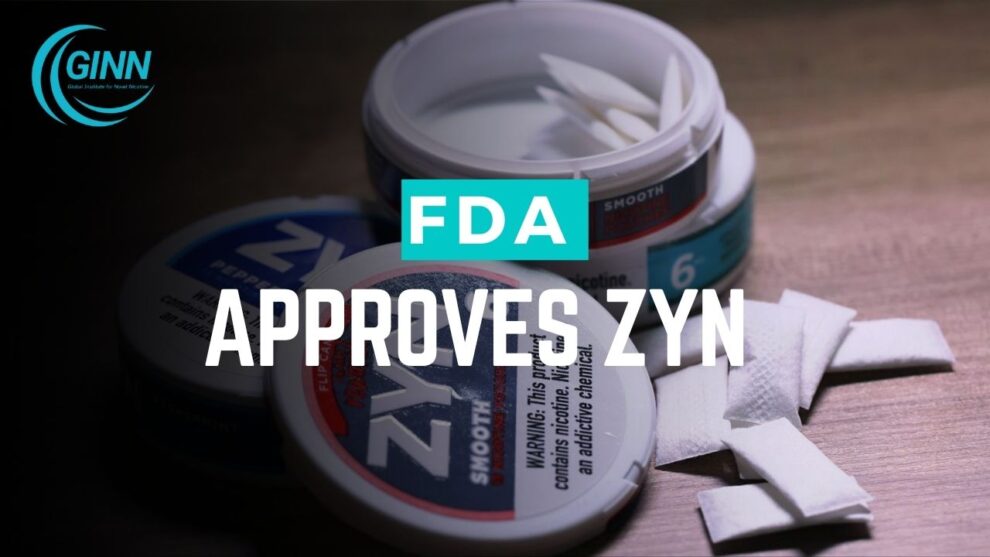
FDA Issues PMTA for Nicotine Pouches: A Clear Regulatory Pathway Emerges

The U.S. Food and Drug Administration (FDA) has taken a landmark step in tobacco harm reduction by authorizing the marketing of 20 ZYN nicotine pouch products. This authorization, granted under the Premarket Tobacco Product Application (PMTA) process, establishes a clear regulatory pathway for nicotine pouches, reinforcing their role as a viable alternative for adult smokers…

Read more

The Future of Nicotine Pouches in Europe: A Regulatory Crossroads

The growing popularity of nicotine pouches as a smoke-free alternative has positioned them as a pivotal tool in tobacco harm reduction. However, their rapid market growth has also drawn increased regulatory scrutiny, particularly in the European Union (EU). As policymakers deliberate over the future of these products, the question arises: Could nicotine pouches face stricter…

Read more

Exploring the Growth of Nicotine Pouch Use in Britain: Benefits and the Need for Regulation

The rise of nicotine pouch use in Great Britain, while modest, signals a pivotal shift in tobacco consumption trends. According to a new study published in Nicotine and Tobacco Research by Dr. Leonie Brose, Laura Bunce, and Hazel Cheeseman, nicotine pouch usage has reached 5.4%. However, only 1% of respondents reported current use, suggesting that…

Read more

Written evidence submission from Global Institute for Novel Nicotine (GINN) to the Tobacco and Vapes Public Bill Committee

1. Executive Summary Safer nicotine products (SNPs), such as nicotine pouches, lozenges, gums, dissolvables and other reduced-risk nicotine alternatives, should not be regulated in the same manner as combustible smoking tobacco products and nicotine vaping products because they– • are smokeless and do not pose the same relative health risks; • readily contribute to a…

Read more

Regulatory Framework for Novel Nicotine Products: Broughton Life Sciences Recommendations

As the global conversation on tobacco harm reduction evolves, regulatory frameworks for novel nicotine products are under scrutiny. Broughton Life Sciences Ltd., a leading consultancy in life sciences, recently submitted comprehensive recommendations to the UK Parliament, offering a roadmap for establishing safety, quality, and compliance standards for nicotine pouches and other reduced-risk alternatives. Key Recommendations…

Read more

The Case for Risk-Proportionate Taxation of Nicotine Products: A Harm Reduction Approach

As nicotine products evolve, public health policies must adapt to reflect scientific evidence and advance harm reduction goals. Central to this evolution is the idea of risk-proportionate taxation—a fiscal framework that aligns tax rates with the relative health risks of different nicotine products. This approach not only supports harm reduction but also incentivizes smokers to…

Read more

🔔 New Licensing Scheme Alert: U.K. Tobacco and Vapes Bill Update

As the U.K. Parliament advances the Tobacco and Vapes Bill, a key feature is the introduction of a licensing scheme for retailers of nicotine pouches and alternative nicotine products. This initiative aims to regulate sales and storage, ensuring public health and safety. What Retailers Need to Know 🔹 Dual Licensing Requirement: Retailers must obtain both…

Read more

🔹 Share Your Thoughts: GINN’s Submission for the UK Tobacco and Vapes Bill 🔹

As the UK Tobacco and Vapes Bill advances in the House of Commons, GINN is preparing to contribute its insights. We believe the regulatory framework must balance innovation with public health while ensuring consumer safety. Here’s what we propose: 🔹 Market Access: Introduce a clear and transparent notification process for manufacturers, requiring detailed disclosures of…

Read more

EU Taxation and Regulation: A Case for Nicotine Pouches and the Swedish Model

As the European Union considers new tax measures under the proposed revision of the Tobacco Excise Directive (TED), the focus on nicotine pouches highlights the growing debate over their regulation and taxation. This burgeoning segment within the nicotine market holds promise for harm reduction, but significant taxation could undermine its potential to encourage smokers to…

Read more

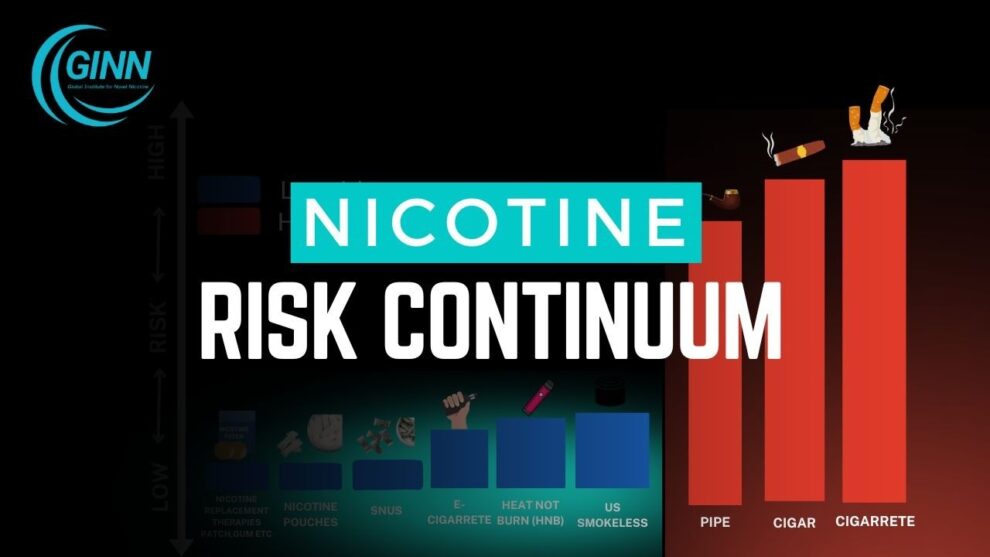
Understanding the Risk Continuum of Nicotine and Tobacco Products

Nicotine and tobacco products exist on a spectrum of risk, ranging from the highest to the lowest health impact. This risk continuum provides a valuable framework for understanding the varying health effects of these products on individuals and populations, empowering people to make more informed decisions for their health. The High-Risk End: Combustible Tobacco Products…

Read more

Greece’s Progressive Approach to Tobacco Harm Reduction

Greece has emerged as a leader in innovative strategies to reduce smoking-related harm, reflecting its commitment to improving public health. Over the past few years, the country has introduced comprehensive measures to combat smoking while embracing harm reduction as a pivotal part of its national strategy. The National Action Plan Against Smoking In November 2019,…

Read more

Nicotine as an Approved Substance: Exploring Its Role in Smoking Cessation and Harm Reduction

Nicotine, widely known for its association with tobacco products, is also recognized as an approved drug by health authorities such as the World Health Organization (WHO). In therapeutic contexts, nicotine plays a pivotal role in smoking cessation strategies, offering safer alternatives to combustible tobacco use. When delivered without the harmful effects of combustion, nicotine replacement…

Read more

Embracing Change and Challenges: Insights from the Global Institute for Novel Nicotine

At the inaugural session of GINN’s in-person panels, hosted by the Global Institute for Novel Nicotine (GINN), key industry leaders gathered to address the evolving landscape of the nicotine pouch industry. This landmark event was not only a platform for sharing insights but also for delineating the path forward amid changing regulatory environments and market…

Read more

Global Anti-Smoking Index 2024: Insights from Around the World

The 2024 Global Anti-Smoking Index, as presented by “We Are Innovation” highlights significant advancements in tobacco control and harm reduction strategies across diverse regions. While certain nations shine as leaders in this space, others lag behind, underscoring the urgent need for equitable and effective global tobacco policies. European Nations Dominate the Top 20 European countries…

Read more

Exploring the Insights of Professor Fredrik Nystrom: A New Perspective on Health and Metabolism

Recently, I came across an update on Sweden’s progress that included fascinating insights from Professor Fredrik Nystrom.His perspectives were nothing short of captivating, particularly his insights on the metabolic interplay between nicotine and coffee. Inspired by his talk, I have begun reading his book, which challenges many conventional health norms with a refreshing scientific rigor.…

Read more

The Triple-A Innovation: Sweden’s Road to Smoke-Free Success

Sweden has made remarkable progress in the fight against smoking, achieving what many thought impossible—bringing its smoking rate to an impressive 5.3%. By combining innovative strategies with traditional tobacco control measures, Sweden has set a powerful example for the world. At the heart of this success lies the “Triple-A Innovation,” focusing on three key aspects:…

Read more

Reflecting on the Leading with Innovation: Sweden’s Path to Smoke-Free Event in London

Congratulations to Suely Castro and Federico N. Fernández, CEO of We Are Innovation for organizing such an impactful event! It was an incredible experience to attend Leading with Innovation: Sweden’s Path to Smoke-Free, where we celebrated Sweden’s remarkable journey toward a smoke-free future. 🌍🎉 A special shoutout to the keynote and panel speakers: Sweden has…

Read more

Global Debate on Nicotine Pouches: Bans, Challenges, and Reforms

Nicotine pouches, small sachets placed between the gum and lip to release nicotine without tobacco, have become a focal point in global public health policies. Countries are grappling with their potential as smoking cessation tools versus concerns about health risks and youth appeal. New Zealand’s Evolving Stance In 2020, New Zealand’s Labour government banned the…

Read more

The Case Against Nicotine Pouch Bans: Overlooked Potential for Smoking

Recent global trends indicate a growing inclination among governments to impose bans or stringent regulations on nicotine pouches. While these measures are often driven by public health concerns, they may inadvertently overlook the potential of nicotine pouches as effective tools for smoking cessation and harm reduction. France’s Prohibition on Nicotine Pouches In October 2024, France…

Read more

Vape Bans Could Undermine Smoking Reduction Efforts, Warns GINN

Dated: 27 August 2024 The Global Institute for Novel Nicotine (GINN) has issued a strong warning against proposed government restrictions on vape products, emphasizing that such measures could hinder progress in helping smokers transition to less harmful alternatives. As a newly formed organization advocating for harm reduction, GINN is committed to advancing innovation and evidence-based…

Read more